
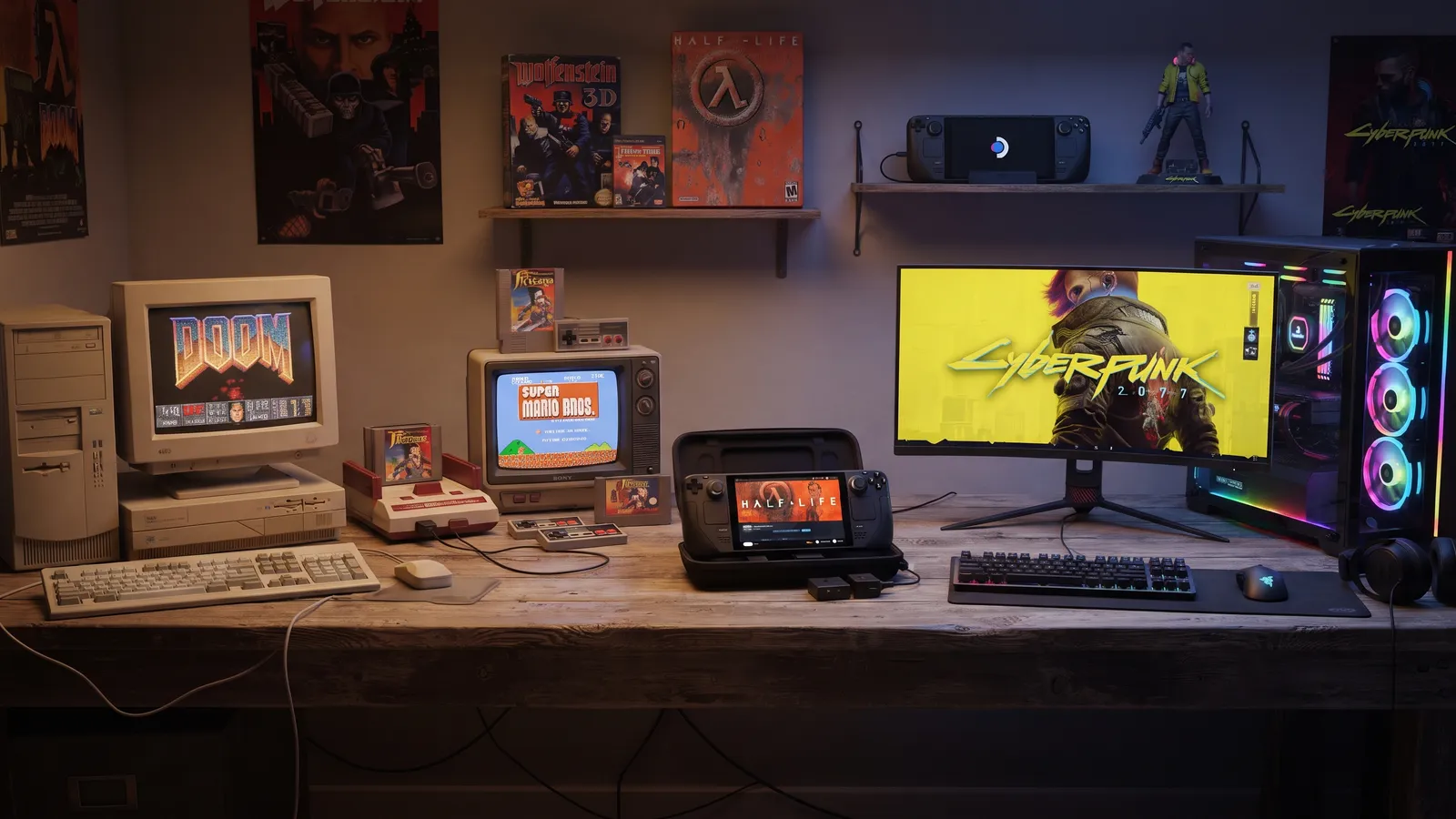
I grew up in the mid-1990s with two machines side by side: a Dendy 8-bit console and an MS-DOS 486. Prince of Persia, Super Mario Bros., Dangerous Dave, Wolfenstein 3D, Dune II, Prehistorik 2 — the classics, passed around on floppies, with no saves and a notepad full of level codes instead.
Then came the first time I saw two computers talk to each other. Someone's older brother had wired the house with coax and RJ45, handed out static IP addresses like they were phone numbers, and got four machines into a single Doom deathmatch. To a kid who thought servers were magic, the people who could actually build that were not technicians. They were architects. I decided very early that I wanted to be one of them.
When the LAN got long-distance
My school friends and I scattered — different cities first, then different countries. The honest, dial-the-IP multiplayer we loved quietly stopped working at that distance. That is where virtual LANs came in: a zero-configuration mesh that made a machine in another time zone look like it was plugged into the same switch as you. Old games that only understood a local network suddenly worked again. The trick that kept our LAN alive was a small piece of software and a network name.
Playing the world
My work in logistics took me across Southeast Asia, South America and Eastern Europe. In almost every place I stayed longer than a fortnight, I met local gamers — in internet cafés, hostel lounges, LAN events — and invited the ones I clicked with onto the private mesh. The virtual LAN got bigger, and so did the collection of dedicated servers some of us kept running in closets and spare rooms.
Along the way we got picky about who we played with. Public servers had grown into a lottery of wallhacks, aimbots and toxic matchmaking. We wanted the opposite: a clean room where everyone is known, games are chosen together, and the fair-play rules are enforced by the people hosting, not by an anonymous report queue.
game-play.net
game-play.net grew out of that room. Today it is a small, private service that hosts game servers in France and Germany for the people we met along the way — no public matchmaking, no randoms, no cheaters. If you are already part of the circle, this is where your servers live.
— Julien M., game-play.net
Questions about the service? Write to us at contact@game-play.net.